Tattoo Aftercare Day by Day: What Is Normal From Day 1 to Week 6
The tattoo session lasts a few hours, but healing takes weeks, and the way you care for your tattoo during that time decides how sharp and bright it looks for the rest of your life. Many people panic around day five, when the tattoo starts flaking, or in week three, when it looks dull and cloudy. Both are completely normal. This guide explains what happens at each stage, what you should do and the warning signs that mean you should get help.
Day 1: Fresh and Tender
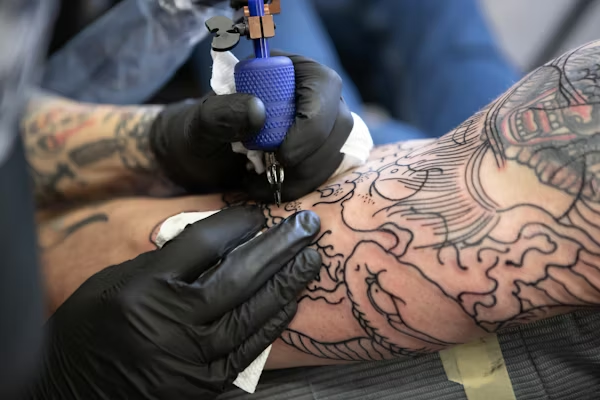
When you leave the studio, your tattoo will be covered with plastic wrap or a breathable adhesive film. The skin will feel like a mild sunburn: warm, a little swollen and tender. It is normal for clear fluid, a little blood and excess ink to collect under the wrap. This is plasma, the body's natural healing response.
- Plastic wrap: remove it after the time your artist recommends, usually two to four hours, then wash the tattoo gently.
- Breathable film: it can usually stay on for two to four days. Fluid collecting under it is normal. Remove it early only if it leaks or comes loose.
- Wash with clean hands, lukewarm water and a mild, fragrance-free soap. Do not use a sponge, loofah or cloth.
- Pat dry with a clean paper towel and let it air-dry for ten minutes before applying a very thin layer of aftercare ointment.
- Sleep on clean sheets and wear loose clothes over the area.
Days 2 to 3: Oozing Slows Down
Redness and swelling should start to settle. The tattoo may still feel warm and look slightly raised. Keep washing it gently twice a day and applying a thin layer of ointment or fragrance-free lotion. The aim is to keep the skin slightly moist, not greasy. If it looks shiny and wet, you have used too much; blot the excess with a paper towel.
Avoid heavy exercise, tight clothes and anything that rubs against the tattoo. Do not let pets lick or sleep on it.
Days 4 to 7: Flaking Starts
The top layer of skin begins to dry and flake, a bit like a peeling sunburn. Small coloured flakes coming off are normal; this is dead skin carrying a little surface ink, not your tattoo falling apart. Thicker lines and heavily shaded areas may form a thin scab.
This is the stage where most damage is done, because it is tempting to pick. Do not peel, pick or scratch. Pulling off a flake or scab too early can take ink with it and leave patchy spots that need a touch-up.
Days 7 to 14: The Itchy Stage
As the skin heals, it gets itchy, sometimes very itchy. This is normal, but scratching can damage the healing skin. Instead, try gently tapping or patting the area, applying a cool compress over clean cling film, or using a little more fragrance-free lotion. Continue washing once or twice a day.
Most flakes and light scabs will have fallen off by the end of the second week. Keep the tattoo out of direct sun, and avoid swimming pools, rivers, the sea, steam rooms and long baths.
Weeks 3 to 4: Dull and Cloudy
Once the flakes are gone, many people are disappointed to see that their tattoo looks faded, milky or cloudy, as if behind a thin layer of wax. This is a new layer of skin that has not fully settled yet. It does not mean the ink has gone. Keep moisturising once or twice a day and stay patient.
You can usually go back to swimming and regular exercise at this point if the surface is fully closed with no scabs, but check with your artist first.
Weeks 4 to 6: Settled and Sharp
The deeper layers of the skin finish healing and the cloudiness fades. Your tattoo now shows its true, settled look. This is the time to judge whether any area needs a touch-up. Small gaps are common, especially on hands, feet and areas that bend, and many studios include one touch-up session for free within a set period.
Lifelong Care
- Sunscreen is the most important thing you can do. UV rays break down tattoo ink over time, especially colours. Use SPF 50 on exposed tattoos.
- Moisturise regularly. Healthy, hydrated skin keeps lines looking crisp.
- Be careful with laser hair reduction and chemical peels over tattooed skin, and always tell the practitioner about your tattoo.
- Expect some softening over the years. This is natural, and a touch-up can refresh an older piece.
When to See a Doctor
Contact your artist and see a doctor if you notice any of the following:
- Redness that keeps spreading after day three, or red streaks moving away from the tattoo.
- Swelling, heat or pain that increases instead of decreasing.
- Thick yellow or green discharge, or a bad smell.
- Fever or chills.
- A raised, very itchy, bumpy rash on one colour of ink, which can be an allergic reaction even weeks or months later.
Infections are uncommon when the studio uses sterile equipment and you follow aftercare, but they need prompt treatment when they happen. If you are planning your first tattoo, read our complete first tattoo guide.
Frequently Asked Questions
Which ointment should I use on a new tattoo?
Use the aftercare product your artist recommends, or a plain, fragrance-free ointment or lotion. Apply only a very thin layer. Avoid products with perfume, alcohol or petroleum jelly in thick layers.
Can I shower with a new tattoo?
Yes, short showers are fine and help keep it clean. Avoid soaking it in a bath, pool or bucket of water, and do not point a strong jet of hot water directly at it.
When can I go in the sun with my new tattoo?
Keep it covered and out of direct sun until it has fully healed, usually three to four weeks. After that, apply SPF 50 sunscreen whenever it is exposed.
This article is general information based on our studio experience and is not a substitute for advice from a doctor or dermatologist. If you have a medical condition, allergy or concern, please consult a qualified professional. Read our full disclaimer.
Rishi Verma founded Bombay Beauty & Tattoo in Shajapur and leads the studio's tattoo and hair work. Our guides are written with the studio team from the questions clients ask us every day, and are reviewed by the team member who performs each service. More about our studio.